Schriftgröße
100%
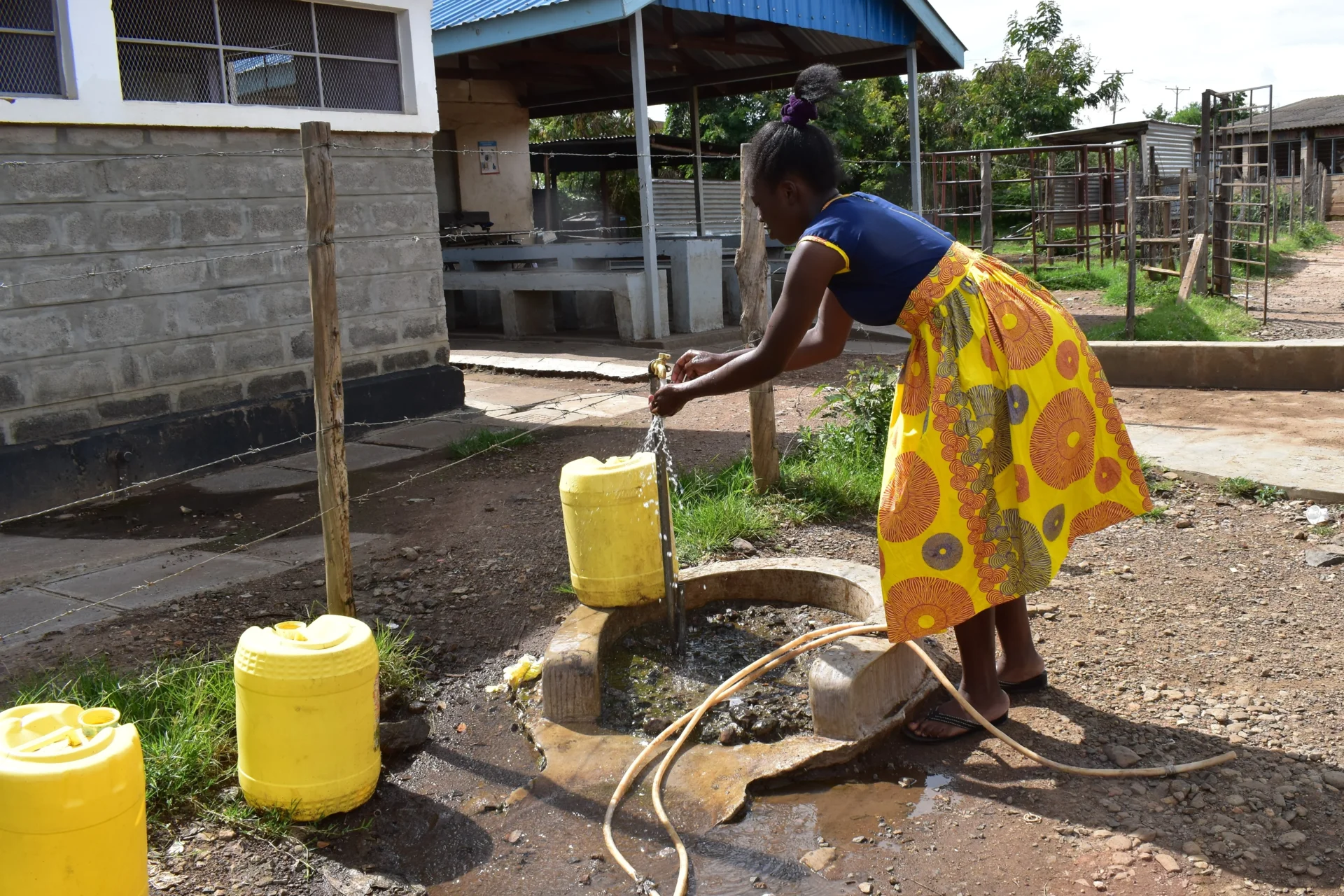
The Climate Advocates: Female Climate Advocates
Project Objective
Empower vulnerable women by equipping them with knowledge about climate change, sustainable agriculture, and alternative irrigation methods so they can secure their livelihoods in the long term
Promote the active participation of pregnant women and single mothers in village and urban communities so they can gain recognition, become more visible, and build new self-confidence
Raise awareness of sexual violence by documenting cases and creating a strong network of support and solidarity
Initial Situation
In Kenya’s far west, villages and small towns lack infrastructure and jobs—not least because the region was divided as early as the colonial era, when European powers arbitrarily drew national borders, separating entire families.
Added to this are the increasingly drastic effects of climate change, which are forcing people into the cities to improve their chances of survival. In the Busia region, many small-scale farmers are being pushed into food insecurity by changing rainfall patterns, droughts, and floods. Fields can no longer be cultivated as they once were.
What does that mean, specifically?
SOLWOGIDI invests in sustainable irrigation systems and modern solutions for farm work. Through training sessions, smallholder women learn how to use solar-powered water pumps for drip irrigation on their fields, for example. They then pass on the knowledge they’ve gained to other community members—thus expanding the impact beyond each individual woman.
Participants in the training sessions include single mothers and young mothers who became pregnant or had a child while still in their teens. Many of them face exclusion and stigmatization. SOLWOGIDI Kisumu deliberately focuses on social recognition: community leaders and respected figures are involved in the meetings to promote acceptance of the mothers and to send a visible message of appreciation.
SOLWOGIDI staff act as a bridge between government agencies, community leaders, and local women’s groups. Since sexual violence is a major taboo and threatens the livelihoods of many women, mixed-gender committees are formed, consisting of trained smallholder women farmers and other community members. They document cases of gender-based violence and refer them to the appropriate authorities.
Bring about structural changes
Since around 2018, SOLWOGIDI Kisumu and Butere have also been collaborating with government-run Agricultural Research Institutes (ARIs) in surrounding administrative districts. The ARIs are local government environmental offices responsible for implementing national strategies in Kenya aimed at achieving sustainable and socially just improvements in agriculture.
In practice, however, many of these projects fail due to a lack of government funding, particularly for training staff in sustainable community management. In addition, planned infrastructure projects often come to a standstill due to structural problems and corruption.
In this context, SOLWOGIDI plays a central mediating role: Drawing on its expertise in social work, the organization helps connect vulnerable women with government actors, draws attention to structural challenges in project implementation, and helps ensure that government measures are better aligned with the actual needs of the communities.
The project, therefore, takes a unique, holistic approach to addressing a wide range of challenges: exclusion, climate change, violence, and economic insecurity are tackled together—through knowledge, solidarity, and sustainable solutions.
The Climate-Resilient Agriculture project is being carried out at two locations in Kenya: Butere and Busia
With your donation, you can help continue to fund this project.

Bank Transfer
SOLWODI Deutschland e.V.
IBAN: DE84 5905 0000 0020 0099 99
BIC: SALADE55XXX
Donation Keyword:
Landwirtschaft